Posts


Imagine my surprise. It was a chill December day as I drove through rural South Carolina on my way home from a visit with my sister. As I flipped around the radio dial I found some easy-listening jazz and settled back to enjoy the winter landscape flying by my window. Now here’s the surprising part. When the commercial break arrived, I found I was listening to WLGI, a 50,000 watt radio station in Williamsburg County, S.C…but not just any small station…This was run by a local Bahá’i community institute. Bahá’i in the rural south?
My reaction in finding the radio station was, “Only in America!” I immediately fired off a text message to a Bahá’i friend in Brussels. Then I reflected a little more…The Bahá’i are persecuted, excluded, and murdered in their native Iran and have been since the 19th century. Here in the U.S. about 130,000 Bahá’i live and worship freely.
Then I reflected a little more…Only a few short months ago the TV was full of reports of a Florida preacher who threatened to burn a Koran and bitter opponents of an Islamic Center in lower Manhattan taking to the streets.
All these reflections and more bring me to the importance of today. On January 16, 1786 the Virginia legislature adopted the Virginia Statute for Religious Freedom. In 1993, the U.S. Congress commemorated this historic occasion by establishing National Religious Freedom Day.
Thomas Jefferson wrote the historic legislation but it took his friend, James Madison, to push it through the state legislature, opposed all the way by Patrick Henry. The immediate impact was to disestablish the Anglican Church as the official state church and stop laws persecuting other religions.
During the hot debates over the Statute, which would deprive the Anglican church of state tax revenues, representatives tried to limit the coverage to Christians. Madison successfully stopped the effort. Jefferson wrote he was delighted the move "was rejected by the great majority, in proof that they meant to comprehend within the mantle of its protection, the Jew and the Gentile, the Christian and Mahometan, the Hindoo, the infidel of every denomination."
The essence of the statute is clear: "all men shall be free to profess, and by argument to maintain, their opinion in matters of religion, and that the same shall in no wise diminish enlarge, or affect their civil capacities." Original intent is crystal clear in these and many statements by Madison, Jefferson, and others.
Later, when Madison took up his duties in the first U.S. Congress, his first duty was to draft a set of amendments to the new Constitution he helped create. The first of these comes down to us as the First Amendment, establishing religious freedom and separation of church and state. Madison drew on the Virginia Statue and his life-long devotion to freedom of conscience.
So celebrate Religious Freedom Day, by the dictates of your own conscience, not just today, but every day. Whether you embrace a particular religion, no religion or something in between, the spirit of this day belongs to you.
The Bahá’i belief of our universal family living in peace sure brings that message home.
* * * * * *
© Rebecca Staton-Reinstein, President, Advantage Leadership, Inc. http://www.advantageleadership.com/
If you’re unfamiliar with the Bahá’i Faith, it was founded in 1852 by a Persian nobleman while imprisoned in Teheran for his religious beliefs. Bahá'u'lláh, a monotheist, believed all humans are part of the same family and ultimately believe in the same god. He emphasized the importance of the messages and messengers of all religions, and living a moral, ethical, peaceful life while serving other. (Learn more at http://www.bahai.org/)
Jefferson included authorship of the Virginia Statute and the Declaration of Independence and the founding of the University of Virginia as the 3 accomplishments to be placed on his grave stone.
Sunday, January 16, 2011


Tuesday, January 4, 2011
Pitch out those New Year’s Resolutions…NOW!
That’s right – dump the list…and the guilt that always follows when you don’t follow through. Sure, I know it’s important to make a plan. After all, strategic planning is a main focus of my business. I encourage people to make a plan and follow it. But that’s a very different scenario from our annual flirtation with resolutions.
Most plans and all resolutions are very light on methodical follow through.
When it comes to planning, less is more – fewer goals, fewer tactics. When Dolly Parton was asked about plastic surgery, she retorted,

But even a limited number of goals won’t get you the results you need. For each goal, set at least one objective; a concrete description of results to accomplish a goal. Make sure they are SMART; Specific, Measurable, Assignable, Realistic, and Time Related.
But goals and objectives don’t float out of the air. Their purpose is to fulfill a mission; what you are trying to do or be and for whom. The mission and your detailed plan are the basis for daily decision making and action.
Once all of these elements are in place, you can figure out how to achieve each objective, what activities or tasks you will perform. Most people start at this tactical level without all the detail in between. You can end up with a to-do list that keeps you busy…but…Busyness is not good business.
OK, full disclosure: My own plan in 2010 had too many goals and objectives. I didn’t accomplish some of them. But I had a plan, tracked my progress, and made adjustments along the way. The result was a very successful year. As I finish my plan for the new year, I’m following my own advice. I’m on a goals diet.
One of those few goals is to make more planning and process resources available. I’ve already accomplished my first objective; convert a 30-day email mini-course coaching program on strategic planning into a very accessible e-book. It’s now available on Amazon Kindle…
30 Days to Creating a Strategic Plan that Gets Results is packed with the coaching advice I’ve given my successful clients; practical, proven tips, techniques, and strategies that get results and help you face the inevitable challenges of implementing a plan in a dynamic environment.
What’s in it for you?
Enjoy your success…Enjoy your results.
Available on Amazon:
30 Days to Building a Strategic Plan that Gets Results (Kindle eBook)
Success Planning: A 'How-To' Guide for Strategic Planning (Soft cover manual)
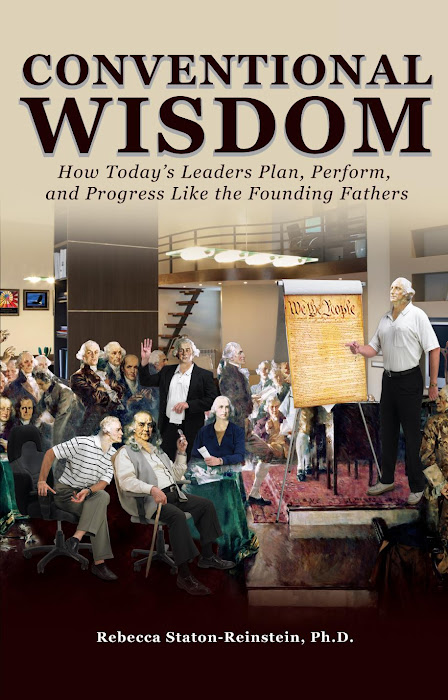
Conventional Wisdom: How Today's Leaders Plan, Perform, and Progress Like the Founding Fathers (Hard cover business book)
Visit My Author Page on Amazon
http://www.advantageleadership.com/
Most plans and all resolutions are very light on methodical follow through.
When it comes to planning, less is more – fewer goals, fewer tactics. When Dolly Parton was asked about plastic surgery, she retorted,
“Honey, you’ve gotta nip it, tuck it, suck it or chuck it!”
Of course you need some goals; high-level descriptions of results you want. In business the Balanced Scorecard approach suggests goals in only 4 areas; financial, customers, employees, and processes. (Robert Kaplan & David Norton)
But goals and objectives don’t float out of the air. Their purpose is to fulfill a mission; what you are trying to do or be and for whom. The mission and your detailed plan are the basis for daily decision making and action.
Once all of these elements are in place, you can figure out how to achieve each objective, what activities or tasks you will perform. Most people start at this tactical level without all the detail in between. You can end up with a to-do list that keeps you busy…but…Busyness is not good business.
OK, full disclosure: My own plan in 2010 had too many goals and objectives. I didn’t accomplish some of them. But I had a plan, tracked my progress, and made adjustments along the way. The result was a very successful year. As I finish my plan for the new year, I’m following my own advice. I’m on a goals diet.
One of those few goals is to make more planning and process resources available. I’ve already accomplished my first objective; convert a 30-day email mini-course coaching program on strategic planning into a very accessible e-book. It’s now available on Amazon Kindle…
30 Days to Creating a Strategic Plan that Gets Results is packed with the coaching advice I’ve given my successful clients; practical, proven tips, techniques, and strategies that get results and help you face the inevitable challenges of implementing a plan in a dynamic environment.
What’s in it for you?
- Increased results from your efforts significantly.
- Be more productive and effective.
- Show vastly improved financial performance.
- Fulfill your core mission with greater impact and less wasted activity.
- Engage employees fully to accomplish defined goals.
- Delight customers, consumers, constituents or clients who recognize you as the best source for products or services.
- Do more with less in any economic environment.
Enjoy your success…Enjoy your results.
* * * * * * * * * * *
(c) Rebecca Staton-Reinstein, President, Advantage Leadership, Inc. Rebecca@AdvantageLeadership.com 30 Days to Building a Strategic Plan that Gets Results (Kindle eBook)
Success Planning: A 'How-To' Guide for Strategic Planning (Soft cover manual)
Conventional Wisdom: How Today's Leaders Plan, Perform, and Progress Like the Founding Fathers (Hard cover business book)
Visit My Author Page on Amazon
http://www.advantageleadership.com/
Thursday, November 4, 2010
WATTS HUMPHREY -- A Giant Passes from the Scene

His official obit from his long-time base in the Software Engineering Institute at Carnegie Mellon University (http://tinyurl.com/2vffpgt) is headed: Watts Humphrey Succeeded in Changing the World of Software Engineering. "Changing the world of anything is an outrageous commitment," Humphrey said in an interview in early 2010, discussing his decision to come to the SEI. "I knew I couldn't do it alone, and I wanted to be in an environment where I could work with folks and do that."
As the pioneering innovator behind several important software development processes, Watts Humphrey more than met his promise to change the World of software engineering. His contributions go well beyond methodology and the many awards and accolades he received. For decades, his work inspired software engineers and his colleagues and friends worldwide. (Jared Cohon, president, Carnegie Mellon University.)But Watts' legacy is not just for us techie types -- in fact, what made him so successful in "changing the world" was his strategic leadership, that is the ongoing focus of this blog. Watts embodied the qualities that any leader in any field can adopt.
Vision: After years of pioneering work at IBM as a leader of a mammoth, global software engineering group, Watts saw with great clarity what needed to be done to move developing software solutions to business problems from a black art to an engineering discipline. He believed in the power of harnessing technology in a disciplined way.
Translate vision to reality: Watts was not one of these leaders who float along at 30,000 feet on his visionary quest but whose feet never touch the ground. He could turn his vision into practical processes that gave individuals a clear road map to daily practice.
Inspiration: Because Watts' vision was so clear and because he could translate it into reality, he inspired generations of folks in the software field by making us want to implement his ideas. His style was easy going but compelling. I still have handwritten notes from the many times I heard him speak and lead seminars -- and I still pull them out and use them in my work.
Caring: At the end of any keynote, presenters like Watts are always mobbed by enthusiastic people. Some busy themselves with packing up their notes and computer, distractedly hand out a few cards, and slip away. Others believe they have a captive audience to continue pontificating or shamelessly trying to drum up consulting gigs. Watts was different. He talked with each person, no matter how new to the field and naive, as if he or she were the only person in the room. He shared. He was warm and encouraging. No matter how long the line, he was patient and engaged.
Commitment: His commitment to changing the world of software engineering was authentic and not grandiose. Many in the field believe they have the keys to better software solutions and don't mind telling you how great they are, how wrong others are, and how following them will get you to the promised land of zero defects. Watts simply told stories about how real people had succeeded in putting processes in place to improve results. His commitment was to the people that toil away in Cube Land day after day, trying to support their organizations with technology; the Dilberts of the world. Watts’ commitment was not to aggrandizing himself.
Great Management: Long before the Gallup organization published First Break All the Rules: What the World's Greatest Managers Do Differently (FBAR,) Watts wrote a little volume called Managing Technical Professionals. In it he lays out how to adapt and adopt our understanding of human psychology to bring out great performance in people. FBAR simply confirmed with extensive data what Watts had learned from his experience as a manager and leader. Whether you manage technical or non-technical people, it is still one of the best handbooks for day-to-day working with people. (Of course FBAR is a necessary resource too.)
So whether you're a techie who was touched directly or indirectly by Watts and his breakthroughs or whether you're just trying to be a good manager and leader, spend a little time investigating and learning from this giant...he did change the world for the better...and the world is a little diminished today with his passing. Luckily we can all access and learn from his legacy which will be with us a long time.
Farewell, Watts. We will miss you and we will never forget you and what you have done for us.
* * * * *
(C) Rebecca Staton-Reinstein, President, Advantage Leadership, Inc.
Author: Conventional Wisdom: How Today's Leaders Plan, Perform, and Progress Like the Founding Fathers
Wednesday, September 22, 2010
Strike up the band for leadership
Learning from great leaders including the US founding fathers is the constant theme of this blog. Today, I want to depart and tell you about a close-to-home example that everyone could learn from.
My husband plays clarinet in a community band. It's a mixed group of professional musicians, many of them retired, students, people who only began to play an instrument recently, and those who have played for decades. The average age of the players is probably around 70. From September to June they play a 2-hour concert once a month in a local community center to an enthusiastic audience. They specialize in marches and show tunes.
For the last few years my father-in-law and I sit in the audience and enjoy the show, tapping our feet to the peppy pieces and singing along to familiar songs. It's pleasant and we have a good time. But...the music isn't always that good. Often in the past it lacked a certain energy...a certain polish.

This past Sunday the band blew our socks off and played for 2 1/2 hours and had us all applauding and begging for more. People were out of their seats and very excited.
So what was different? Well, the band had a new conductor. That was the only difference...and what a difference it was.
His transformation of the band reminded me of a quote from Dr. W. Edwards Deming about work and leadership:
My husband plays clarinet in a community band. It's a mixed group of professional musicians, many of them retired, students, people who only began to play an instrument recently, and those who have played for decades. The average age of the players is probably around 70. From September to June they play a 2-hour concert once a month in a local community center to an enthusiastic audience. They specialize in marches and show tunes.
For the last few years my father-in-law and I sit in the audience and enjoy the show, tapping our feet to the peppy pieces and singing along to familiar songs. It's pleasant and we have a good time. But...the music isn't always that good. Often in the past it lacked a certain energy...a certain polish.

This past Sunday the band blew our socks off and played for 2 1/2 hours and had us all applauding and begging for more. People were out of their seats and very excited.
So what was different? Well, the band had a new conductor. That was the only difference...and what a difference it was.
- Energy and Focus: The new conductor, although a few years older than the previous one, had a spring in his step, a smile on his face, and an energetic conducting style. It wasn't flamboyant but it was active. Great leaders do that. They exude energy and focus. In fact, new research underway at MIT is measuring this to demonstrate the difference between the merely adequate and the great leader.
- Engagement: As the new conductor put the band through its paces, he made eye contact with different sections, subtly bringing them in, building their sound or lowering their volume. He engaged with individuals and sections to bring out the best in them. Great leaders do that. When they are talking with you, you are the only person in the room. Your own energy level increases and your performance moves toward your true capabilities.
- Highlighting Achievement and Talent: The new director composed a program with the usual marches and show tunes but with a twist. Each one highlighted a particular section -- the brass, the winds, the drums, etc. Each tune gave a whole section the opportunity to strut their stuff and shine in front of the audience. He also had several pieces that featured individual members up front soloing and demonstrating their unique talents. Leaders are proud of the talents of their teams and want them to shine. Great leaders don't have to be the center of attention or the best at everything.
- Making the best with what you have: The community band has a diversity of talent. Some members aren't very good while a few are outstanding musicians. But what makes such a band possible is that everyone is there because they want to be. They enjoy playing music whether they are particularly good at it or not. The former band leader used to spend a lot of time fussing at people, trying to get them to play better. The new director talks about the music with them -- its meaning, origin, and subtleties. Leaders do that naturally. They get everyone focused on a goal -- in this case, playing a particular piece of music as well as possible. They have a clear mission -- bring enjoyment to the community through their music making. He keeps them focused on the goal and mission -- they do their best on their own to meet those.
- Challenge the Team to Excel: The former conductor would always include at least one or two 'serious' pieces -- usually a little slow (even draggy.) All they managed to do was highlight the lack of talent in some players when the tempo slowed and individual instruments were harder to hide in the ensemble. The new conductor had a different approach that both challenged the players and, again, got the best out of them. First, he lengthened the program by about 20 minutes, adding more pieces. Second, he had one more challenging piece, still in the genre the band does best. The band was a little apprehensive but they came through with flying colors -- or rather soaring sound. Their energy was a little lower by the end but still higher than all of last season. Leaders help their teams build on their strengths and remind people of the confidence they have in them.
His transformation of the band reminded me of a quote from Dr. W. Edwards Deming about work and leadership:
Why are we here? We are here to come alive...to have joy in our work.
The band leader brought joy to his players, the audience, and to himself. Strike up the band for your own leadership.
*** *** *** *** *** ***
(c) Rebecca Staton-Reinstein, president, Advantage Leadership, Inc.
For more about learning from great leaders, check out Conventional Wisdom: How Today's Leaders Plan, Perform, and Progress Like the Founding Fathers, available at http://www.conventionalwisdomcenter.com/
Learn more about how Rebecca and her team can help you develop your own strategic leadership and that of your team at http://www.advantageleadership.com/
Thursday, September 16, 2010
Happy Unity Day
 |
| I sign the US Constitution |
James Madison, Alexander Hamilton, and Benjamin Franklin conspired to call what we know today as the Constitutional Convention. Fifty-five delegates from 12 of the 13 states met through four hot, muggy months, from May to September, in the Pennsylvania State House (now Independence Hall.) They hammered out a new Constitution using James Madison's draft as a jumping off point. They argued, postured, debated, and speechified. They were sometimes grumpy and occasionally even rude to one another. They caucused, cajoled, and compromised. (They also partied, went on excursions, dashed home to attend to business, and complained bitterly about the hard conditions in boarding houses and lack of money to pay for food and lodging.)
In the end, 40 men signed the document on September 17, 1787. We owe them a big debt. Once the Constitution was ratified in the states and the government was established with its three branches and a bicameral legislature, the states were no longer sovereign. That's right. Many states had considered themselves sovereign prior to this. Without the unity that was established with the Constitution, the likelihood that the new nation would have survived is quite slim.
Today we many argue about the amount of authority that should rest in the states and the federal government, and the framers left it a little vague in places. The fact is we are one united nation. So September 17 should be a big celebration for each American. And maybe its OK that it hasn't become another day to skip work, watch fireworks, and barbecue. Instead, why not take a little time to read the document itself. http://www.usconstitution.net/const.html Find out what it really says. It's quite short, even with the amendments. And, maybe just thank little Jemmy Madison and the boyz for persisting in their quest for a "more perfect Union."
*** *** *** *** ****
(C) Rebecca Staton-Reinstein, Ph.D., President, Advantage Leadership, Inc.
Richard Brookhiser has written an excellent profile of James Madison recently. Check it out
Want to know more about the Constitutional Convention and how it functioned as a strategic planning session? Check it out: http://www.ConventionalWisdomCenter.com

Tuesday, August 24, 2010
Brits Burn White House TODAY!
Yes, the British did burn the White House on this day (August 24) in 1814...just thought I'd throw in a screeching headline because they are all the rage as the media cover big events. What was going on back in 1814? Why were the British so mad? Probably they were retaliating for the U.S. burning public buildings in York (Toronto) Canada...all part of the War of 1812.

The soldiers added insult to injury by eating the food set out on the dining room table and sarcastically drank to "Jemmy's health" with his fine wines in crystal glasses...then burned the house, capitol, and assorted other official buildings.
It was a bitter day in U.S. history after several humiliating defeats in the war. President Madison was not at home to great his unwelcome guests but was on horseback in the field with his army. He was the last Commander in Chief to actually take part in a battle. It was all the more surprising because of his frail physique.
Of course, Madison is not known for his military prowess. He has no eponymously named buildings in Washington, his face does not stare out from Mt. Rushmore, nor does he grace any money. But we should be thinking about James Madison today, on the anniversary of the burning of his official residence because of his pivotal role in the Constitution and the Bill of Rights. They are his monument.
What would Madison make of the current roiling debates about building an Islamic Center in New York City? There are several clues -- more than that, well established facts. Here's a brief entry from Wikipedia that summarizes those facts.
Madison wrote widely about the issue of freedom of conscience and religion. Unlike Jefferson and Franklin for example, he was a religious person and a member of the Episcopal faith. During the fight to ratify the new Constitution, many opponents demanded the addition of a bill of rights. Madison, at first opposed such a list as both unnecessary and inadequate but was eventually convinced that it was important to gain support for the Constitution. He digested the hundreds of proposed amendments down to a manageable few and shepherded them through the first Congress to become the first 10 amendments, the Bill of Rights. He crafted the first amendment based on the Virginia statute (written by Thomas Jefferson) that he got through the Virginia legislature.
Madison paid a price for opposing the powerful Henry on the religious freedom issue and winning the Constitution ratification debate in Virginia. Henry blocked his appointment as a Senator and supported powerful candidates against him in his congressional district. Madison prevailed.
As he did with the Baptists and other so called dissenting faiths in Virginia, he stood for absolute freedom of religion. When he helped dismantle the official religion of Virginia (his own Episcopal Church) he made it clear what the original intent of the First Amendment was.
The demagoguery that has replaced debate of the issue of the Sufi mosque would have disturbed Madison greatly. The religious hatred, intolerance, and lies that have circulated and not been refuted by so-called responsible politicians would have made him physically ill. There is no way of knowing what position Madison would have taken on the location of the center. But we do know what he said on the freedom to practice ones religion and the absolute separation of church and state.
196 years ago, our capitol was in flames and our president was leading an army to defend our country and the Constitution and Bill of Rights he helped author. I think Jemmy's advice to those who support and oppose the building of the mosque might have been the following:
* * * * *
(c) Rebecca Staton-Reinstein, President, Advantage Leadership, Inc.
Author: Conventional Wisdom: How Today's Leaders Plan, Perform, and Progress Like the Founding Fathers http://www.conventionalwisdomcenter.com/

The soldiers added insult to injury by eating the food set out on the dining room table and sarcastically drank to "Jemmy's health" with his fine wines in crystal glasses...then burned the house, capitol, and assorted other official buildings.
It was a bitter day in U.S. history after several humiliating defeats in the war. President Madison was not at home to great his unwelcome guests but was on horseback in the field with his army. He was the last Commander in Chief to actually take part in a battle. It was all the more surprising because of his frail physique.
Of course, Madison is not known for his military prowess. He has no eponymously named buildings in Washington, his face does not stare out from Mt. Rushmore, nor does he grace any money. But we should be thinking about James Madison today, on the anniversary of the burning of his official residence because of his pivotal role in the Constitution and the Bill of Rights. They are his monument.
What would Madison make of the current roiling debates about building an Islamic Center in New York City? There are several clues -- more than that, well established facts. Here's a brief entry from Wikipedia that summarizes those facts.
As a young lawyer, Madison defended Baptist preachers arrested for preaching without a license from the established Anglican Church. In addition, he worked with the preacher Elijah Craig on constitutional guarantees for religious liberty in Virginia.[10] Working on such cases helped form his ideas about religious freedom. Madison served in the Virginia state legislature (1776–79) and became known as a protégé of Thomas Jefferson. He attained prominence in Virginia politics, helping to draft the Virginia Statute for Religious Freedom. It disestablished the Church of England and disclaimed any power of state compulsion in religious matters. He excluded Patrick Henry's plan to compel citizens to pay for a congregation of their own choice.
Madison's cousin, the Right Reverend James Madison (1749–1812), became president of the College of William & Mary in 1777. Working closely with Madison and Jefferson, Bishop Madison helped lead the College through the difficult changes involving separation from both Great Britain and the Church of England.
Madison wrote widely about the issue of freedom of conscience and religion. Unlike Jefferson and Franklin for example, he was a religious person and a member of the Episcopal faith. During the fight to ratify the new Constitution, many opponents demanded the addition of a bill of rights. Madison, at first opposed such a list as both unnecessary and inadequate but was eventually convinced that it was important to gain support for the Constitution. He digested the hundreds of proposed amendments down to a manageable few and shepherded them through the first Congress to become the first 10 amendments, the Bill of Rights. He crafted the first amendment based on the Virginia statute (written by Thomas Jefferson) that he got through the Virginia legislature.
Madison paid a price for opposing the powerful Henry on the religious freedom issue and winning the Constitution ratification debate in Virginia. Henry blocked his appointment as a Senator and supported powerful candidates against him in his congressional district. Madison prevailed.
As he did with the Baptists and other so called dissenting faiths in Virginia, he stood for absolute freedom of religion. When he helped dismantle the official religion of Virginia (his own Episcopal Church) he made it clear what the original intent of the First Amendment was.
The demagoguery that has replaced debate of the issue of the Sufi mosque would have disturbed Madison greatly. The religious hatred, intolerance, and lies that have circulated and not been refuted by so-called responsible politicians would have made him physically ill. There is no way of knowing what position Madison would have taken on the location of the center. But we do know what he said on the freedom to practice ones religion and the absolute separation of church and state.
196 years ago, our capitol was in flames and our president was leading an army to defend our country and the Constitution and Bill of Rights he helped author. I think Jemmy's advice to those who support and oppose the building of the mosque might have been the following:
- read your history -- including the Constitution and Bill of Rights
- dial back the rhetoric and emotion -- discussion and dialogue work where demagoguery doesn't
- remember why we were fighting 200 years ago...
* * * * *
(c) Rebecca Staton-Reinstein, President, Advantage Leadership, Inc.
Author: Conventional Wisdom: How Today's Leaders Plan, Perform, and Progress Like the Founding Fathers http://www.conventionalwisdomcenter.com/
Monday, July 19, 2010
Don't know much about historeeee...
You may not remember the old pop song with that refrain but it could be the theme song of way too many people. My sister called the other night and told me about a meeting she went to in her town. The discussion got pretty hot and heavy and one woman pulled out her pocket-sized copy of the Constitution and waved it around as she made her points, disagreeing with whatever was being said.
Now my sister is not the shy retiring type that I am - ;-) - and so she asked her, "Did you actually read the Constitution?" "Well, no...but I know what it says..." and went on with her harangue, misquoting and mangling the document -- rhetorically not physically.
To my sister and me, it was a reminder us of being dragged off to tent revivals by our grammaw where various lay preachers would thump the good book, tell us what it said, and threaten us if we doubted them.
The problem with the thumpers is that in the words of the founding fathers, the constitution, or the bible or other holy books, you can cherry pick phrases that agree with your beliefs and ignore those that don't. If your audience doesn't know any better and hasn't studied the details themselves, you can say just about anything. Psychologist know that if the idea is repeated often enough, you will come to believe if, even when faced with hard facts to the contrary.
Here's an example from a letter to USA Today (7/1/10) from a writer commenting on the passing of Senator Robert Byrd of West Virginia.


Want to read a couple of chapters first? Send an email to Rebecca@AdvantageLeadership.com with "Chapters" in the subject line.
Now my sister is not the shy retiring type that I am - ;-) - and so she asked her, "Did you actually read the Constitution?" "Well, no...but I know what it says..." and went on with her harangue, misquoting and mangling the document -- rhetorically not physically.
To my sister and me, it was a reminder us of being dragged off to tent revivals by our grammaw where various lay preachers would thump the good book, tell us what it said, and threaten us if we doubted them.
The problem with the thumpers is that in the words of the founding fathers, the constitution, or the bible or other holy books, you can cherry pick phrases that agree with your beliefs and ignore those that don't. If your audience doesn't know any better and hasn't studied the details themselves, you can say just about anything. Psychologist know that if the idea is repeated often enough, you will come to believe if, even when faced with hard facts to the contrary.
Here's an example from a letter to USA Today (7/1/10) from a writer commenting on the passing of Senator Robert Byrd of West Virginia.
Our Founding Fathers did not intend congressional positions to be life-long ones. They felt that it was the duty of our leaders to give of their time and manage their states temporarily, and that this was in the best interests of their constituents...
We have senators...[who] have become professional politicians.
He goes on to support term limits AND age limits.
There are many good arguments for and against term limits...but how the founding fathers "felt" is not among them. There were among the founders those who saw it as their duty (or privilege) to serve in government for a while and then return to private life. George Washington is a good example.

But not all the "fathers" followed that path nor believed it was the best path. Three examples from three different political philosophies come to mind. Patrick Henry was one of the most powerful professional politicians in Virginia and served in a variety of positions in the state including the governorship. He was a strong "states rights" defender and foe of the new federal Constitution because it removed the absolute power of the states.

John Adams started out as a lawyer but was soon drawn into the Continental Congress and became a professional politician, serving as a representative in the Continental Congress, and as a diplomat in France and England. With the establishment of the new federal government he became Vice President and then President. He was a Federalist and only left office when defeated by Jefferson in the election of 1800.

James Madison beginning in his mid-twenties was only out of public office for a couple of years. He served in county and state legislatures, the Continental Congress, worked with Alexander Hamilton and Ben Franklin to engineer the Constitutional Convention, served in the new Congress, was Secretary of State under Jefferson, and finally served as a two-term president. Although starting out with a strong nationalist/federalist bent, he moved away from this by Washington's second term and worked along side Jefferson to found the Republican Party (which later morphed into the Democratic Party.)
My point is that the letter writer didn't know some basic history, which he could have discovered in a history book, on the web, or (in the olden days) in school. But that seems too hard. I recently set my Google Alerts to look for references to the Founding Fathers -- everybody adopts them to prove their points. I'm on a quest to confront ignorance with facts.
The founding fathers were as complex, complicated, and conniving as any modern politician or leader. They were humans. They had their points of greatness and their follies. We should admire them, not because we can find some words they uttered that fit our political views but because of what they did, sometimes in spite of themselves, to create a system of government that works and is self-correcting through the will of the people.
Before you adopt their words to prove yourself right, read the entire body of their work. Learn what books they were reading and what philosophers influenced their thinking. Know what was going on in the wider world and in their world.
Learn a little more about historeeeee....
* * * * * * * *
(c) Rebecca Staton-Reinstein, President , Advantage Leadership, Inc.
Want to know a little more about historeee and contemporary leaders? Check out Conventional Wisdom: How Today's Leaders Plan, Perform, and Progress Like the Founding Fathers. Available on Amazon.
Want to read a couple of chapters first? Send an email to Rebecca@AdvantageLeadership.com with "Chapters" in the subject line.
Subscribe to:
Posts (Atom)